


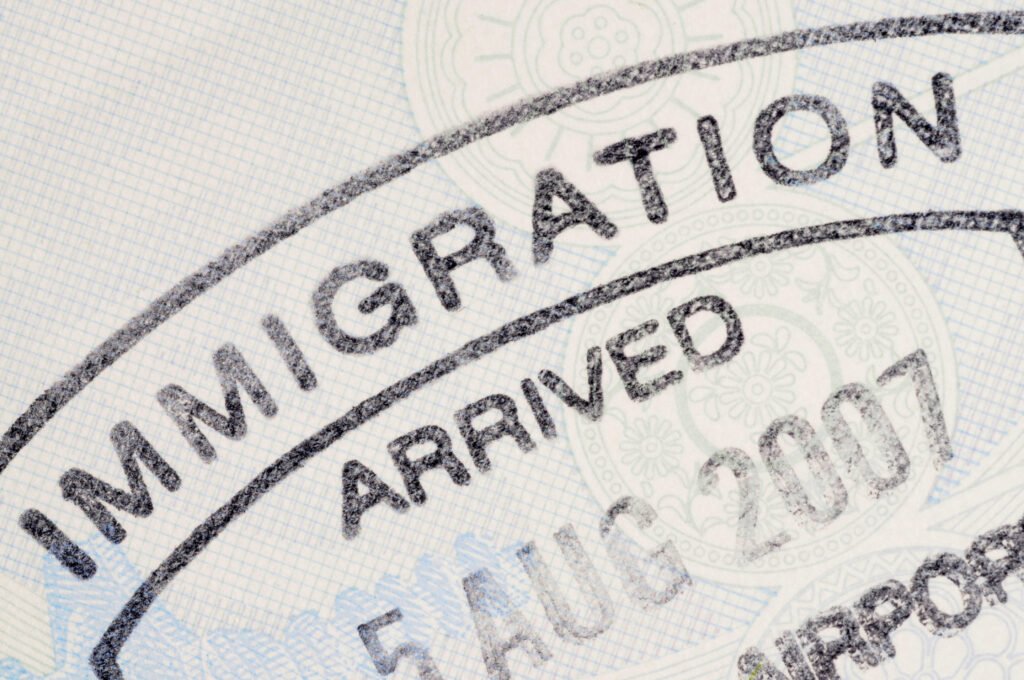
One of the most common questions people have when coming to the United States is simple: how long can I actually stay? The answer, though, is not always straightforward. Your authorized length of stay depends on a number of factors, including the type of visa you hold, the date stamped on your entry documents, and decisions made by immigration officers at the port of entry. Understanding how all of this works can save you from serious legal consequences down the road.
It Starts With Your Visa, But Your Visa Is Not the Whole Story
Many people assume that the expiration date on their visa tells them how long they can remain in the United States. This is one of the most widespread misconceptions in immigration law, and it catches people off guard all the time.
Your visa is essentially a travel document. It tells U.S. Customs and Border Protection (CBP) officers that you have been approved to request entry into the country. Once you arrive at a port of entry, the CBP officer reviews your documents and decides whether to let you in and, crucially, for how long.
The actual record of your authorized stay is documented on your Form I-94, which is the Arrival and Departure Record. For most travelers today, this is an electronic record rather than a paper form. You can look yours up at the official CBP website. The date shown on your I-94 is the date by which you must leave the United States or take action to extend your stay.
Common Visa Types and How Long They Allow You to Stay
Different visa categories come with very different rules about how long a person can remain in the country. Here is a breakdown of some of the most common categories:
- Tourist and Business Visas (B-1/B-2): These are typically issued for up to six months at a time, though the CBP officer at the border makes the final call. Extensions may be possible in certain situations.
- Student Visas (F-1 and M-1): Students on these visas are generally admitted for the duration of their status, meaning they can stay as long as they are enrolled in a full course of study and maintain their visa conditions.
- Work Visas (H-1B, L-1, O-1, and others): These are tied to a specific employer and purpose. The length of stay is usually determined by the approved petition period, often ranging from one to three years with the possibility of extensions.
- Exchange Visitor Visas (J-1): These are tied to a specific program and sponsor. The authorized stay is determined by the program end date listed in the SEVIS system.
- Fiancé Visas (K-1): This visa allows a foreign national to enter the U.S. to marry a U.S. citizen within 90 days. After marriage, the person must apply to adjust their status.
- Green Card Holders (Lawful Permanent Residents): Permanent residents can live and work in the U.S. indefinitely, though they must maintain their residency and avoid extended absences that could be interpreted as abandoning their status.
Each of these categories has its own set of rules, and the consequences for misunderstanding them can be serious. This is why working with a qualified immigration attorney, like the team at Suday Law, can make a meaningful difference in protecting your status.
What Is Authorized Stay and Why Does It Matter?
Your authorized stay is the period of time the U.S. government has officially permitted you to remain in the country. Staying beyond this period, even by a single day, puts you in violation of your immigration status. This is known as overstaying your visa, and it carries significant consequences.
Here is why it matters so much:
- A short overstay (1 to 180 days) can result in being found inadmissible if you attempt to re-enter the United States in the future.
- An overstay of more than 180 days triggers a three-year bar on re-entry to the U.S.
- An overstay of more than one year triggers a ten-year bar on re-entry.
- Multiple violations or certain criminal offenses combined with overstays can result in a permanent bar from the United States.
These are not minor administrative issues. They are long-term consequences that can affect your ability to ever return to the United States, whether for work, family visits, or future immigration benefits.
Special Situations That Can Affect Your Length of Stay
There are several circumstances that can change or complicate how long you are authorized to remain in the United States. It is important to be aware of these so you can plan accordingly.
Filing for an Extension of Stay
If you are in the U.S. on a nonimmigrant visa and you need more time, you may be eligible to apply for an extension of stay through U.S. Citizenship and Immigration Services (USCIS). You generally need to file before your current authorized stay expires. It is important to note that simply filing an extension application does not automatically mean it will be approved, and you should not overstay while waiting unless you have filed on time and are in a period of authorized stay pending a decision.
Changing Your Visa Status
In some cases, you may be able to change from one nonimmigrant status to another without leaving the country. For example, a person on a tourist visa who gets accepted to a university may be able to apply to change their status to a student visa. This process must be handled carefully and in advance of any deadlines.
Applying for a Green Card
If you are in the process of applying for lawful permanent residence, your situation becomes more nuanced. Depending on how and when you file, you may be permitted to remain in the United States while your application is being processed, even if your original visa has expired. However, this comes with its own rules and timing requirements, and mistakes can be costly.
Deferred Action and Humanitarian Protections
Certain individuals may qualify for temporary protection from removal through programs like Deferred Action for Childhood Arrivals (DACA), Temporary Protected Status (TPS), or humanitarian parole. These programs allow people to remain in the U.S. legally for specific periods, though they are subject to policy changes and renewal requirements.
What Happens If You Overstay?
Overstaying a visa is more common than many people realize, but that does not make it any less serious. If you remain in the United States beyond your authorized stay, you become subject to removal proceedings. Here is what that can look like in practice:
- Detection: The Department of Homeland Security tracks arrivals and departures. If you do not leave when required, this will be noted in your immigration record.
- Apprehension: You could be detained by immigration enforcement officers, even during routine interactions like a traffic stop.
- Removal proceedings: You may be placed in removal proceedings before an immigration judge, which can result in a formal order of removal.
- Bars to re-entry: As described above, depending on how long you overstayed, you may face multi-year or permanent bars to returning to the U.S.
- Impact on future immigration benefits: An overstay on your record can affect petitions, applications, and approvals for future benefits, even for family members in some cases.
The good news is that if you are currently in the United States and you are concerned about your status, there are often options available to you. The sooner you speak with an immigration attorney, the more options you are likely to have.
Permanent Residents: A Different Set of Rules
Green card holders, or lawful permanent residents (LPRs), have a much more stable immigration status than nonimmigrant visa holders. They can live and work in the United States without worrying about a visa expiration date. However, this does not mean their status is entirely without conditions.
Permanent residents can lose their status if they:
- Remain outside the United States for an extended period without a re-entry permit
- Declare themselves a nonimmigrant on tax returns or other official documents
- Commit certain crimes that make them deportable under immigration law
- Fail to notify USCIS of changes of address
As a general rule, permanent residents who plan to travel outside the U.S. for more than six months should consult with an immigration attorney before departing. Absences of more than one year without a re-entry permit can result in being found to have abandoned your permanent residence.
The Path to Citizenship
For many immigrants, the ultimate goal is U.S. citizenship through a process called naturalization. To qualify, you generally need to:
- Be At least 18 years of age when you file
- Have been a lawful permanent resident for at least five years (or three years if you obtained your green card through marriage to a U.S. citizen)
- Demonstrate continuous residence and physical presence in the United States during that period
- Have lived in the state or district where you claim residence for at least 3 months before filing
- Show good moral character
- Pass a civics and English language test, unless an exception applies
- Take an oath of allegiance to the United States
Once you become a naturalized citizen, questions about authorized stay, visa expiration, and removal no longer apply to you in the same way. You have the full right to live in the United States. Naturalization gives you the same rights as citizens by birth, including the right to live and work in the United States permanently, travel on a U.S. passport, vote, and petition for certain family members. Questions about authorized stay, visa expiration, and removal no longer apply to you in the same way.
Citizenship is very difficult to lose, but it is not absolute. The government can move to revoke naturalization in limited cases, most often when it was obtained through fraud or a material misrepresentation at some point in the immigration history. That is why accuracy matters at every stage, from the original green card petition through the naturalization interview. Working with an attorney helps ensure your record is consistent and complete before you file.
Take Control of Your Immigration Status Today
Immigration law is detailed, and the stakes are high. Whether you are trying to extend a tourist visa, protect a student status, pursue a green card, or understand your rights as a permanent resident, having accurate information and experienced guidance makes all the difference. At Suday Law, the goal is to help individuals and families navigate these questions with clarity and confidence. Do not wait until a deadline has passed or a problem has already developed. Reach out to a qualified immigration attorney today, ask your questions, understand your options, and take the steps needed to protect your future in the United States.