




Cuando un menor de edad llega a Estados Unidos sin uno de sus padres o sin un tutor legal, o cuando ha sido abandonado, maltratado o descuidado, el camino a seguir puede parecer abrumador. Afortunadamente, existe una vía legal diseñada específicamente para proteger a estos jóvenes. El Estatus Especial de Inmigrante Juvenil en Texas, comúnmente conocido como SIJS, ofrece una vía hacia la residencia permanente legal para menores que han atravesado ciertas situaciones difíciles. Sin embargo, lo que muchas personas no saben es que un tribunal de familia de Texas desempeña un papel fundamental para hacer posible este proceso.
¿Qué es el Estatus Especial de Inmigrante Juvenil?
El Estatus Especial de Inmigrante Juvenil es una clasificación migratoria federal creada para proteger a menores inmigrantes que han sido maltratados, abandonados o descuidados por uno o ambos padres. Una vez aprobado, el SIJS puede conducir a una Green Card, lo que le permite al menor vivir y trabajar permanentemente en Estados Unidos.
Para calificar, el menor debe cumplir con varios requisitos importantes:
- Debe ser menor de 21 años al momento de presentar la solicitud.
- Debe ser soltero.
- Debe haber sido declarado dependiente de un tribunal de menores o puesto bajo la custodia de una agencia estatal o de una persona designada por un tribunal estatal.
- Un tribunal debe haber determinado que no es conveniente para su bienestar regresar a su país de origen o al país donde residía habitualmente por última vez.
- Un tribunal debe haber determinado que la reunificación con uno o ambos padres no es viable debido a maltrato, abandono, negligencia o una situación similar reconocida por la ley estatal.
Es precisamente en el tercer, cuarto y quinto requisito donde los tribunales de familia de Texas desempeñan un papel especialmente importante.
Por qué se requiere una orden judicial
El Servicio de Ciudadanía e Inmigración de Estados Unidos, la agencia federal que procesa las peticiones de SIJS, no realiza las determinaciones iniciales sobre la situación familiar del menor. En su lugar, depende de que un tribunal estatal haga primero esas determinaciones. Esto significa que, antes de que un menor pueda presentar la petición federal de SIJS, necesita una orden judicial válida emitida por un tribunal estatal.
Esta orden judicial base, a veces llamada “predicate order”, debe contener determinaciones específicas. No basta con que la orden simplemente coloque al menor bajo el cuidado de un tutor. El lenguaje utilizado en la orden es sumamente importante y debe reflejar los estándares legales exigidos por la ley federal de inmigración. Una orden judicial base a la que le falte incluso una de las determinaciones requeridas puede resultar en la denegación de la petición de SIJS. Los tribunales estatales tienen sus propios requisitos y plazos. En Texas, una orden judicial base debe ser firmada antes de que el menor deje de ser considerado menor de edad al cumplir los 18 años.Tex. Fam. Code Ann. § 101.003(a) (2025) (menor de edad). Cód. de Práct. y Rem. Civ. de Tex., Anot., § 129.001 (2025) (mayoría de edad).
Cómo realizan estas determinaciones los tribunales de familia de Texas
En Texas, existen varios tipos de procedimientos que pueden dar lugar a la orden judicial base necesaria para el SIJS. Los más comunes incluyen:
- Procedimientos de tutela en un tribunal de sucesiones: Cuando una persona que no es uno de los padres solicita la tutela legal de un menor, el tribunal puede hacer determinaciones sobre la incapacidad de los padres para ejercer su función, abandono o maltrato como parte de ese proceso.
- Demandas que afectan la relación entre padres e hijos (SAPCR): Estos son casos civiles de derecho familiar que abordan la custodia, la tutela legal (conservatorship) y la relación entre padres e hijos. Una SAPCR puede dar lugar a determinaciones que respalden una petición de SIJS.
- Casos de Servicios de Protección Infantil: Cuando el Departamento de Servicios para la Familia y de Protección de Texas interviene y un menor queda bajo la custodia del estado, el tribunal que supervisa el caso puede estar facultado para realizar las determinaciones requeridas.
El tipo de procedimiento más adecuado dependerá de las circunstancias específicas del menor, de quién esté solicitando la custodia o tutela y de la evidencia disponible sobre la relación entre padres e hijos.
El estándar del interés superior del menor
Una de las determinaciones requeridas para el SIJS es que regresar al menor a su país de origen no sería lo mejor para su bienestar. Este es un estándar con el que los tribunales de familia de Texas están muy familiarizados, ya que es el mismo que se utiliza generalmente en decisiones relacionadas con la custodia y la tutela.
Al tomar esta determinación, un tribunal puede considerar una amplia variedad de factores, entre ellos:
- Las condiciones en el país de origen del menor, incluyendo la seguridad, la estabilidad y el acceso a necesidades básicas.
- Si el menor tiene familiares en su país de origen que puedan y estén dispuestos a hacerse cargo de él/ella.
- Los vínculos actuales del menor con Estados Unidos, incluyendo su inscripción escolar, sus conexiones con la comunidad y sus relaciones con las personas que están a cargo de su cuidado.
- Cualquier trauma o daño que el menor haya sufrido, incluyendo violencia doméstica, persecución por parte de pandillas o negligencia de los padres.
- Los propios deseos del menor, dependiendo de su edad y nivel de madurez.
Los jueces de los tribunales de familia de Texas no son jueces de inmigración y no se les pide que decidan directamente sobre el estatus migratorio del menor. Su función se limita al bienestar del menor conforme al derecho familiar estatal. Sin embargo, esas determinaciones tienen consecuencias importantes en la capacidad del menor para solicitar un beneficio migratorio.
Qué sucede después de la orden judicial
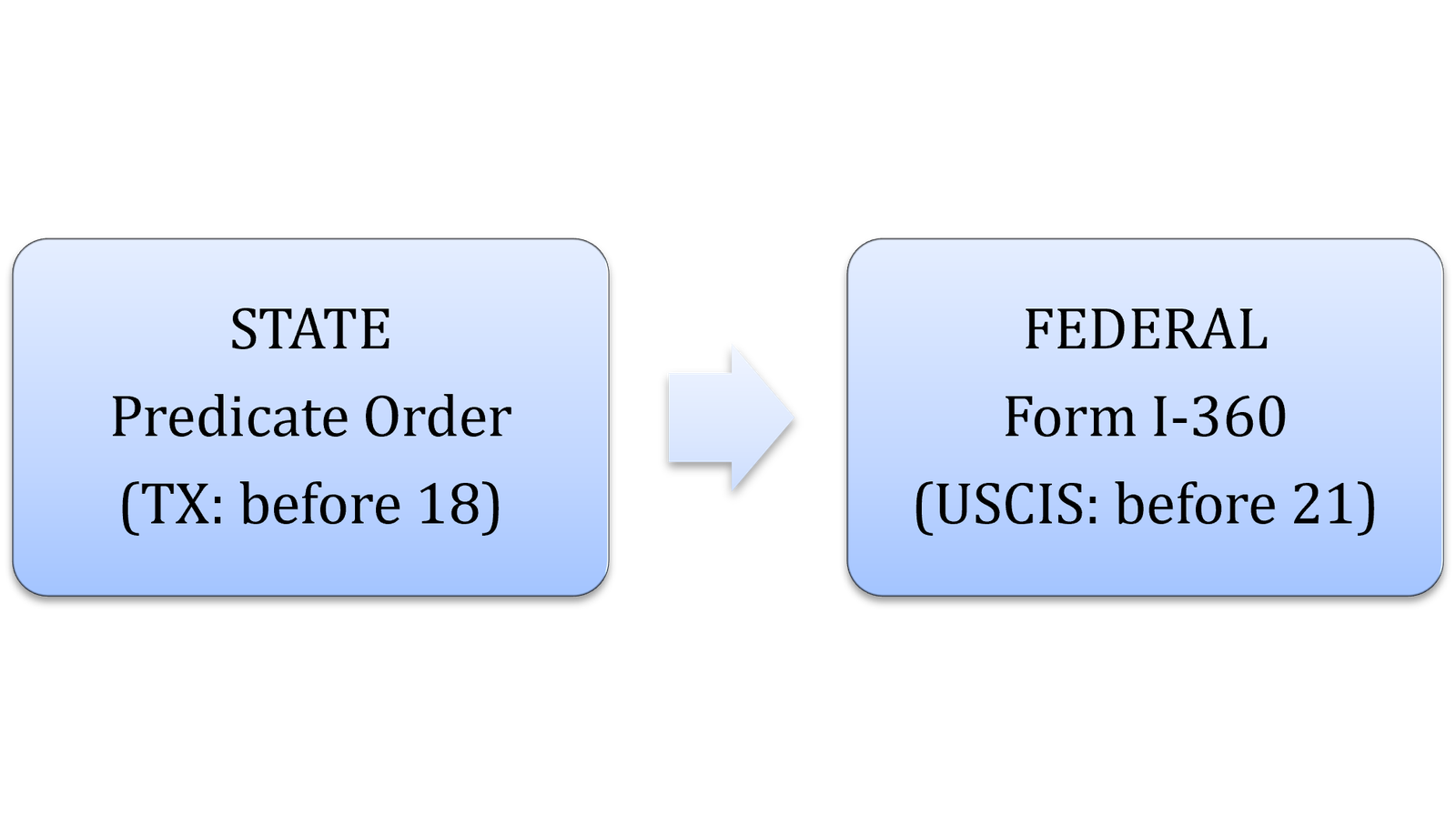
Una vez que un tribunal de familia de Texas emite la orden judicial base con las determinaciones requeridas, el abogado del menor puede utilizarla para presentar el Formulario I-360, la petición federal de SIJS, ante el Servicio de Ciudadanía e Inmigración de Estados Unidos. Mediante este formulario, se solicita al gobierno federal que reconozca al menor como Inmigrante Juvenil Especial con base en las determinaciones realizadas por el tribunal estatal.
Si la petición I-360 es aprobada, el menor puede solicitar la residencia permanente legal, comúnmente conocida como Green Card. Este paso implica presentar el Formulario I-485, Solicitud para Registrar la Residencia Permanente o Ajustar Estatus.
Es importante entender que la aprobación de la petición I-360 no significa automáticamente que el menor recibirá una Green Card de inmediato. La disponibilidad de una Green Card depende del país de nacimiento del menor y de si hay un número de visa disponible de inmediato bajo el sistema anual de cuotas de visas. Los menores de países con una alta demanda migratoria, como México, El Salvador, Guatemala y Honduras, pueden tener largos períodos de espera antes de que haya un número de visa disponible.
Desafíos comunes en el proceso de SIJS
Aunque el SIJS es una protección fundamental para menores en situación de vulnerabilidad, el proceso no está exento de dificultades. Las familias y sus representantes suelen enfrentar varios obstáculos a lo largo del camino:
- Límites de edad: Debido a que el menor debe tener menos de 21 años al momento de presentar la petición I-360, el tiempo es un factor crítico. Las demoras en obtener la orden judicial base pueden poner en riesgo todo el proceso si el menor se acerca a ese límite de edad.
- Barreras del idioma: Muchos menores y sus cuidadores hablan poco o nada de inglés, lo que puede dificultar la participación en los procedimientos judiciales sin representación legal calificada y servicios de interpretación.
- Obtención de evidencia: Demostrar abuso, abandono o negligencia puede requerir documentación de otro país, declaraciones juradas o testimonios de testigos que pueden ser difíciles de localizar.
- Órdenes judiciales base incorrectas: Si la orden judicial no incluye todas las determinaciones requeridas o utiliza un lenguaje impreciso, la petición I-360 puede ser denegada. Por eso es fundamental trabajar con un abogado que comprenda tanto el derecho familiar como el derecho migratorio.
- Cuestiones de jurisdicción: Los tribunales de algunos condados pueden no estar familiarizados con los procedimientos de SIJS, y los jueces pueden necesitar orientación sobre qué determinaciones se requieren y por qué.
El papel de un abogado en los casos de SIJS
Dada la complejidad de los casos de SIJS, contar con un abogado con experiencia no solo es útil, sino que muchas veces puede marcar la diferencia entre el éxito y el fracaso. Un abogado que comprenda tanto el derecho familiar de Texas como la ley federal de inmigración puede:
- Identificar el tipo de procedimiento judicial más adecuado para la situación del menor.
- Redactar la petición o moción de manera que establezca claramente las determinaciones requeridas.
- Preparar al menor y a su cuidador para las audiencias judiciales.
- Revisar y verificar el lenguaje de la orden judicial base antes de que sea presentada.
- Presentar la petición I-360 y toda la documentación de respaldo ante el Servicio de Ciudadanía e Inmigración de Estados Unidos.
- Dar seguimiento al caso y a cualquier actualización, incluidos los cambios en el Boletín de Visas que puedan afectar cuándo el menor puede solicitar una Green Card.
En Suday Law, ayudar a las familias a navegar estos procesos legales que involucran distintas áreas del derecho es una parte esencial de lo que hacemos. Los casos de SIJS requieren una comprensión clara de cómo se relacionan los procedimientos de los tribunales de familia estatales con la ley federal de inmigración, y es precisamente en esa intersección donde contar con la orientación legal adecuada puede marcar toda la diferencia.
Quién puede solicitar el SIJS en Texas
Muchas personas creen que el SIJS solo está disponible para menores que ingresaron a Estados Unidos sin autorización. En realidad, la forma en que el menor ingresó al país no es el factor determinante. El SIJS está disponible para menores inmigrantes sin importar cómo hayan entrado a Estados Unidos, siempre que cumplan con los requisitos de elegibilidad relacionados con su situación familiar y su edad.
Además, este proceso está disponible para menores que están bajo el cuidado de un familiar que no sea uno de sus padres, como una tía, un tío, un abuelo o un hermano mayor. También puede estar disponible cuando un adulto que no es familiar ha asumido su cuidado. La clave es que un tribunal reconozca formalmente ese acuerdo de custodia o tutela y haga las determinaciones requeridas sobre los padres del menor.
Da el siguiente paso por el bienestar del menor que está bajo tu cuidado
Si estás al cuidado de un menor inmigrante que ha sido abandonado, maltratado o descuidado por uno o ambos padres, el Estatus Especial de Inmigrante Juvenil puede ofrecerle una vía hacia la seguridad y estabilidad que merece. El proceso involucra tanto a los tribunales de familia de Texas como a las autoridades federales de inmigración, y cada paso es importante. Desde el lenguaje utilizado en la orden judicial base hasta el momento en que se presenta la petición federal, los detalles de este proceso pueden tener consecuencias duraderas para el futuro del menor. Consultar lo antes posible con un experimentado abogado en derecho migratorio y familiar puede darle al menor una mejor oportunidad de obtener un resultado favorable. El sistema legal puede ser complejo, pero con el apoyo adecuado también puede convertirse en una herramienta poderosa para proteger a quienes se encuentran en una situación de mayor vulnerabilidad. No esperes hasta que se acerque un límite de edad o hasta que una crisis haga urgente tomar acción. Inicia la conversación hoy y da el primer paso para ayudar a asegurar un futuro estable para el menor que está bajo tu cuidado.